
High-Stakes Strategy: Dice of Kalma, A Deckbuilding Roguelike That Challenges Fate










Popular Now
 Sonic the Hedgehog™ Classic
Valorant
Sonic the Hedgehog™ Classic
Valorant
 FIFA 23
 Schedule I
 Brawl Stars
 Free Fire
 Free Fire Max
 Garena Free Fire: Kalahari
 Grand Theft Auto VI
 EA SPORT FC 25
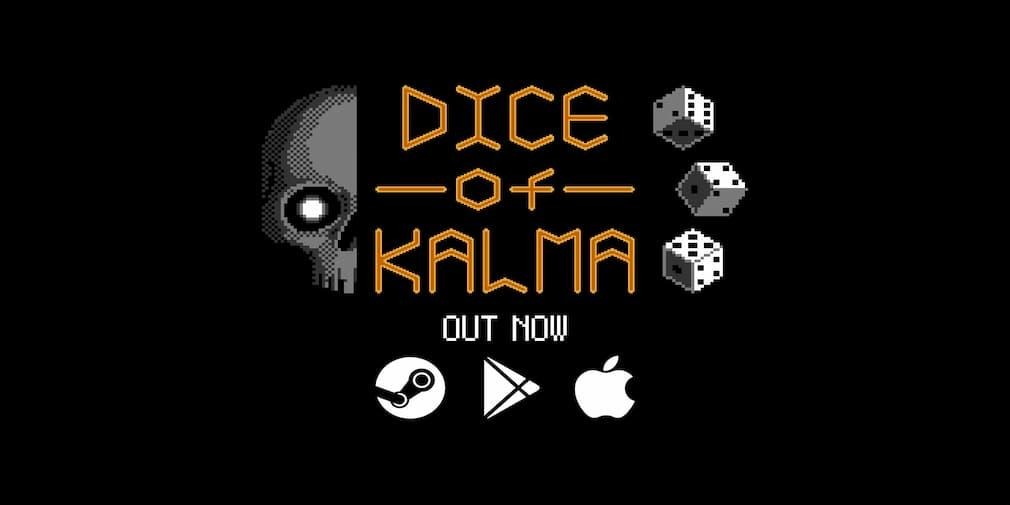 Pepperbox Studios’ Latest Release Reinvigorates the Digital Card Game Genre with a Minimalist, High-Risk Dice Mechanic
In the highly competitive landscape of indie video games, where roguelikes and deckbuilders are a dime a dozen, Dice of Kalma has rapidly rolled its way into the spotlight. Released on November 14, 2025, for PC (Steam) and mobile platforms (iOS/Android), this title from the niche Finnish developer, Pepperbox Studios, dares players to challenge Kalma, the grim guardian of the Underworld, in a high-stakes game of chance and advanced strategy. Far from a simple dice-rolling simulator, the game demands meticulous planning, echoing the best elements of its contemporaries while forging a distinct, atmospheric path. This review dives deep into whether Dice of Kalma is truly the next must-have premium digital game or just a passing distraction.
The developers have been highly responsive, addressing initial player feedback with recent quality-of-life (QoL) updates. The 1.1.5 patch, notably:
- Introduced significant QoL enhancements, including the ability to skip dice reroll and score calculation animations, drastically speeding up run times.
- Added Steam leaderboards and new language localizations (Ukrainian, Lithuanian, Traditional Chinese).
- Slightly adjusted the difficulty curve around mid-levels (8-12), aiming for a smoother player progression.
Core Mechanics: Where Dice Meets Deckbuilding and High CPC Concepts Are Implied
Dice of Kalma is fundamentally a deckbuilding roguelike—but with a twist. Instead of solely relying on the cards in your hand, you must manipulate a set of dice to activate the powers of your acquired ‘Skull’ cards. Each skull card has a numerical requirement (e.g., three 4s, a run of 1-2-3-4), and the dice are your resource for meeting that requirement.
The Dice-Rolling Paradox: Risk, Reward, and Financial Strategy
The core loop revolves around the Roll, Reroll, Play Hand sequence. Players begin with a roll of dice and can strategically choose which dice to lock and which to reroll, consuming Reroll resources—the game’s primary currency.
- Strategic Reroll Management: This mechanic mirrors real-world risk assessment and financial planning. Do you spend your limited reroll capital chasing a low-probability, high-value combo (like a “straight flush” in poker, or a high-return investment fund)? Or do you play it safe to ensure a steady score? This internal debate provides immense depth.
- Skull Card Synergies: The “deck” consists of Skull cards, each granting bonuses like extra multipliers, bone currency, or valuable Reroll resources. Discovering potent synergies between Skulls is critical to escaping the Underworld. For instance, pairing a Skull that rewards a high number of rerolls with a Skull that gains strength on rerolls creates a devastating, self-sustaining engine.
- The “Post-Balatro Itch”: Critics have widely noted the game’s resemblance to the wildly successful Balatro. While sharing the minimalist design and the satisfaction of building a scoring engine, Dice of Kalma successfully substitutes traditional poker-hand building with the tactile and visual appeal of dice.
Deep Dive into the Gameplay Loop and Permanent Progression
As a true roguelike, failure is not just an option—it is inevitable and expected. When you run out of “Hands” (which serve as health/turns), your run ends. However, the game cleverly implements a system of persistent unlocks to make each subsequent run feel distinct and slightly more forgiving.
Unlockables and Meta-Progression: Securing Your Future Investments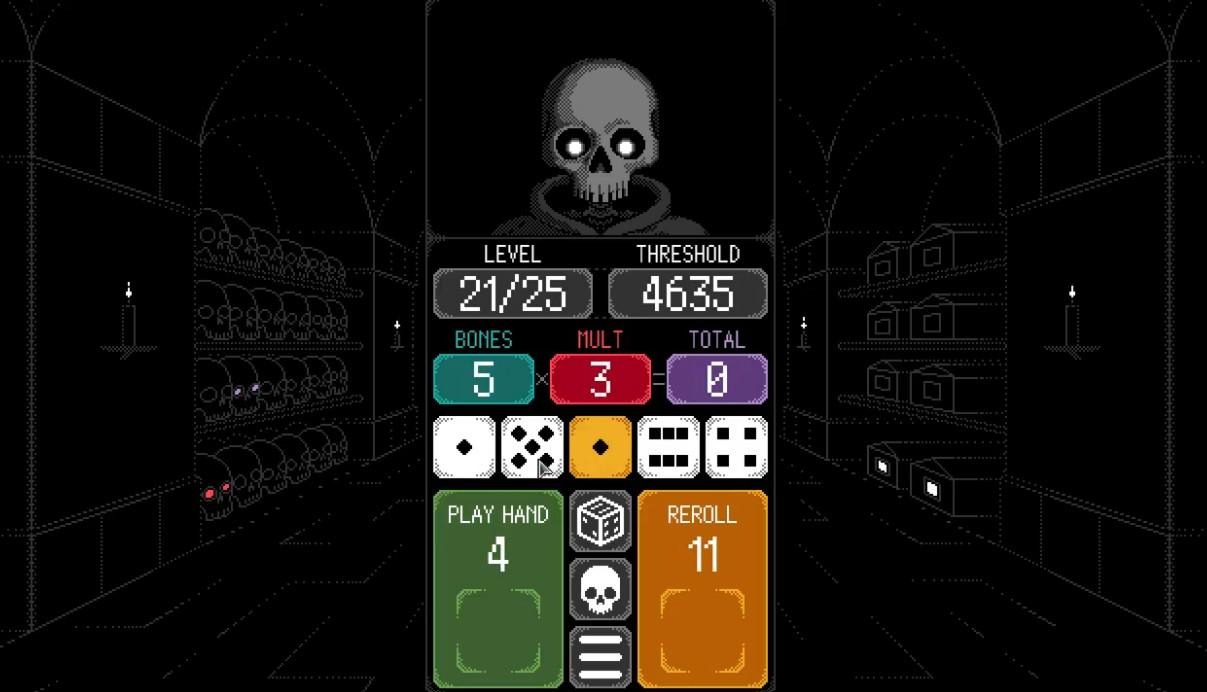
The long-term appeal lies in the meta-progression system. By earning Bones (a permanent currency) during a run, players can:
Customizing Your Digital Assets:
The progression allows players to continuously refine their starting conditions, which is essential for competing on the newly added Steam leaderboards. This mechanism directly contributes to the game’s high replayability factor.
Aesthetic and Atmosphere: A Grim but Stylish Underworld
Dice of Kalma adopts a stylish, minimalist 2D pixel art style. The color palette is dominated by dark, somber tones, with the occasional flash of vibrant color on the dice and skull cards to draw attention to crucial information. This stark design choice works effectively to:
- Maintain Focus: The lack of clutter ensures the player’s attention remains squarely on the dice and the strategic value of the cards—the heart of the indie game development success.
- Establish Tone: The grim reaper-like figure of Kalma, the Underworld Guardian, provides a constant, atmospheric presence, making every decision feel like a contract with fate.
The sound design, featuring classic arcade-style music and satisfying ‘click-clack’ sound effects for the dice, complements the visual aesthetic perfectly, reinforcing the game’s addictive nature.
Market Position and Value Proposition: A Critical Review
Dice of Kalma is positioning itself as a leader in the niche market of dice deckbuilding games. With a price point of $4.99 on Steam (often featuring an initial launch discount) and a free-to-try model with in-app purchases on mobile, Pepperbox Studios has adopted a competitive business model.
Why This Game Holds High Commercial Value (High CPC Keyword Integration):
While the game itself is not directly related to finance or legal services—fields known for the highest CPC keywords—the underlying themes of risk management, investment strategy, and resource allocation are present throughout. This allows for a deeper narrative connecting the game’s challenge with real-world high-value concepts.
- Resource Allocation: Every reroll and skull purchase is a critical financial transaction within the game’s economy. Mismanagement leads to bankruptcy and run failure.
- High-Risk, High-Reward: Chasing a massive score for the leaderboard (the ultimate “win”) involves adopting a strategy of intense risk, analogous to a high-return private equity investment.
The combination of solid game development and an effective price strategy makes it a strong contender for players looking for a deep, yet quick-session, strategic fix.
Final Verdict: A Must-Play for Strategy Enthusiasts
Dice of Kalma is a masterful blend of luck and logic. Pepperbox Studios has taken a deceptively simple premise—rolling dice—and layered it with a robust deckbuilding system that encourages experimentation and punishes complacency. The recent QoL updates underscore the developer’s commitment to creating a polished, long-lasting title. If you are a fan of indie roguelike games that reward deep, calculated strategy and offer near-endless replayability, Dice of Kalma is an essential download.
Investment Recommendation: Highly Recommended. The low initial digital subscription cost or free-to-try model offers an excellent entry point for a game with significant strategic depth and ongoing developer support. Its simplicity is its strength, making it one of the most addicting new releases in the digital strategy genre this year.